

_1790150425011.webp)
Types of Cable Jointing Methods for Safe Electrical Connections






 2026-08-24 15:59:16
View:389
2026-08-24 15:59:16
View:389When it comes to establishing reliable electrical infrastructure, cable jointing remains a cornerstone of safety and performance. Cable jointing refers to the process of connecting two or more electrical cables to ensure uninterrupted power transmission while maintaining insulation integrity and environmental protection. Choosing the right jointing method directly impacts system reliability, maintenance costs, and operational safety. This guide examines proven cable connection techniques and introduces innovative solutions that address real-world procurement challenges faced by electrical distributors, project contractors, and maintenance teams across industrial and commercial settings.

Introduction
Cable Jointing is still one of the most important parts of building a safe and effective electricity system. Cable Jointing is the process of joining two or more electrical wires to ensure continuous power transfer while keeping the purity of the insulation and the environment.
Picking the right Cable Jointing method has a direct effect on how safe the system is to use, how reliable it is, and how much it costs to maintain. This book talks about tried-and-true ways to connect cables and new ideas that can help electrical distributors, project workers, and repair teams in industrial and business settings with the problems they face when they need to buy things.
To keep power going and keep downtime to a minimum, electrical infrastructure needs secure cable connections. To reduce risk and improve sourcing decisions, procurement managers and engineering teams must have a solid understanding of Cable Jointing. When joints aren't done right, they can cause voltage drops, overheating, and even fires. On the other hand, connections that are done right make systems last longer and require fewer emergency repairs.
This guide tells you everything you need to know about Cable Jointing methods, safety standards, and buying things. Buyers of goods, store managers, and project procurement officers who need safe, reliable, and low-cost options that meet international safety standards like IEC and IEEE standards come to us. We want to help people make smart decisions that balance performance, price, and supply chain efficiency by looking into different Cable Jointing methods and how they can be used in real life.
Understanding Cable Jointing: Basics and Safety Considerations
What Cable Jointing Entails
In order to maintain the integrity of the cable, Cable Jointing entails joining electrical conductors while restoring insulation and protective layers. This method can be used for industrial wiring systems, underground installations, and power distribution cables. Some common types of joints are straight joints, which connect two ends of a cable, branch joints, which make tee connections, and termination joints, which connect cables to equipment.
Essential Tools and Materials
Specialized tools, like wire strippers, crimping tools, heat guns, and insulation tests, are needed to put things together well. Some of the materials used are heat shrink tubes, insulating tapes, resin mixtures, and mechanical connections. Quality materials make sure that safety standards are met and that joints last longer in harsh environments.
Safety Standards and Compliance
Following industry standards like IEC 60502 and IEEE 404 makes sure that joints can handle mechanical forces, electrical stress, and water getting in. Cable joints that are done right cut down on downtime, stop electrical problems, and make sure that regulations are followed. These are all very important for B2B procurement teams that are in charge of big projects or keeping track of electrical inventory in multiple places.
Top 5 Types of Cable Jointing Methods for Safe Electrical Connections
Choosing the right Cable Jointing method relies on the needs of the product, the environment, and your budget. Here are five methods that are commonly used and meet different goals in industry.
Heat Shrink Joints
When you heat thermoplastic tubing, it contracts and makes a tight seal around the cable connections. This method can be used indoors or outdoors for jobs that need to be resistant to weather and have mechanical safety. To install something, you have to strip the cables, put on the connectors, place the heat shrink sleeves, and use controlled heat.
Advantages: It's easy to install, it keeps out moisture well, and it can be used in medium-voltage situations.
Limitations: Needs a heat source, can't be used more than once, and could leave gaps if not heated correctly.
Cold Shrink Joints
For cold shrink joints, pre-expanded elastomeric tubes are attached to cores that can be taken out. Once it is in place over the cable joint, the core is taken out. This lets the tube shrink and seal the connection without using heat. This method works great in places where open flames or heat sources could be dangerous.
Advantages: It doesn't need to be heated, the quality of fitting is always the same, and it's perfect for small areas.
Limitations: The material is more expensive than heat shrink, it comes in a smaller range of sizes, and it needs to be handled carefully during installation.
Pre-Molded Joints
Pre-molded joints have insulation parts that are made in the workshop to fit certain wire sizes. Because of their consistent quality and ease of installation, these joints are good for high-voltage uses and underground cable networks. As part of the fitting process, pre-shaped insulation parts are put around wire ends that have already been prepared.
Advantages: Very reliable, uniform quality control, and fewer mistakes during installation.
Limitations: It's not very flexible for non-standard wire sizes, it costs more at first, and the cables need to be prepared very carefully.
Resin-Based Joints
For resin-based joints, epoxy substances are poured into molds around wire links. After 24 to 72 hours, the glue hardens into a solid mass that keeps heat in. This method seals very well against the environment and works well in harsh outdoor conditions, like underground and underwater installations.
Advantages: It is very resistant to wetness, lasts a long time, and is very strong.
Limitations: Long curing times make projects take longer to finish, they need to be applied by professionals, and they are hard to take apart for maintenance.
Mechanical Joints and Terminal Blocks
Compression connectors, terminal blocks, or clamp devices are used in mechanical joints to make electrical contact without chemical bonding or soldering. Terminal blocks with screw connections are popular for use in control panels and junction boxes because they are easy to set up and keep up.
Advantages: No or few tools are needed, links can be used again and again, and fixing is easy.
Limitations: It doesn't protect as well against the environment as resin or shrink ways, links may come loose over time, and it's not good for places with a lot of vibration.
To help procurement teams find solutions that meet project requirements, the table below lists the most important features of each Cable Jointing method:
| Cable Jointing Method | Installation Time | Reusability | Environmental Sealing | Typical Applications |
|---|---|---|---|---|
| Heat Shrink | 30-60 minutes | Low | High | Outdoor power distribution |
| Cold Shrink | 20-40 minutes | Low | High | Limited areas and no-heat zones |
| Pre-Molded | 40-90 minutes | Medium | Very High | High-voltage cables buried underground |
| Resin-Based | 24-72 hours (cure) | Very Low | Excellent | Extreme conditions outside or underwater |
| Mechanical | 10-30 minutes | High | Low | Control panels inside and repair rooms |

Comparing Cable Jointing Methods: Helping You Make Informed Procurement Decisions
Environmental Conditions and Application Suitability
Heat shrink, cold shrink, or resin-based joints are strong ways to seal outdoor installations that are exposed to water, UV light, and changes in temperature. Mechanical joints make upkeep easier and allow circuit changes without changing parts in indoor uses that are easy to get to.
Cost Efficiency and Total Ownership
Even tho mechanical joints are cheap to buy at first, they may need to be inspected often in important situations. While resin-based parts cost more up front, they last longer and require less upkeep over time. To find the best balance between budget limits and long-term dependability, purchasing managers should look at the total cost of ownership instead of just the original purchase price.
Heat Shrink Versus Cold Shrink
For standard setups where applying heat is safe and sensible, heat shrink joints are a cost-effective option. Alternatives to cold shrink work well in dangerous places or places without electricity for heat guns. Both methods work about the same when they are installed correctly, so the choice depends on the safety needs of the specific site.
Resin Versus Mechanical Solutions
For fixed systems that need to be as environmentally friendly as possible, like underground power lines, resin joints are the best choice. Mechanical joints are useful for making short-term connections, prototyping, or systems that need to be rearranged often. Choosing the right way is based on knowing the project's lifecycle and what kind of upkeep is expected.
Regulatory and Site-Specific Considerations
When it comes to environmental standards, indoor installations are usually not as strict as outdoor or basement installations. Following GB/T 14048.7-2016 and other international safety rules makes sure that the Cable Jointing methods chosen are legal and meet insurance standards. Buying certified Cable Jointing kits in bulk makes project compliance easier and lowers the cost of managing vendors.
Innovative Branch Cable Joint Technology: The Oukamu ZR-JFZ-150/50
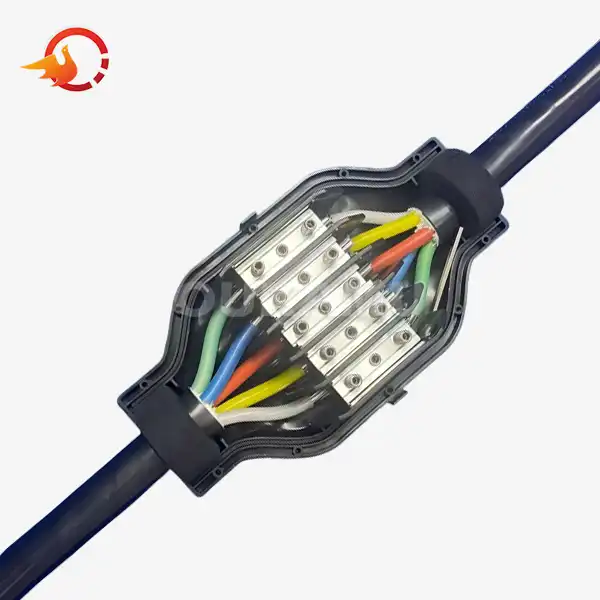
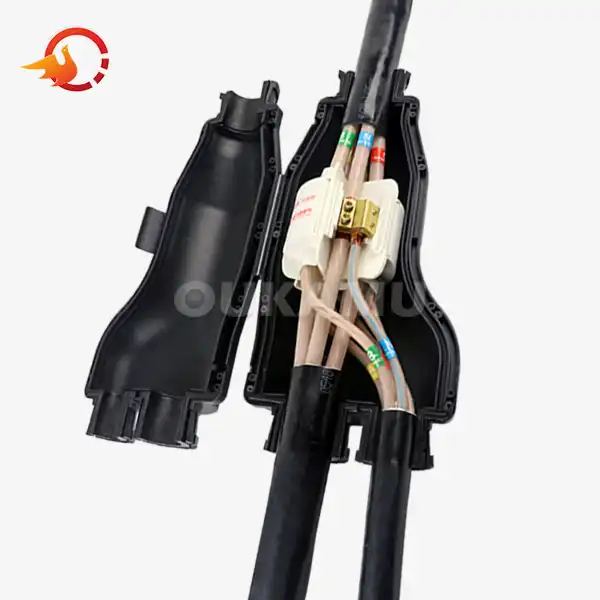
With traditional Cable Jointing methods, main cables often have to be cut and reserved at exact lengths, which wastes material and limits the flexibility of the installation. These problems can be solved by branch cable joint technology, which has built-in T-connectors that let you connect branches on-site without cutting the main cable. This method changes the way that cables are managed in commercial, local, and building projects.
Technical Specifications and Features
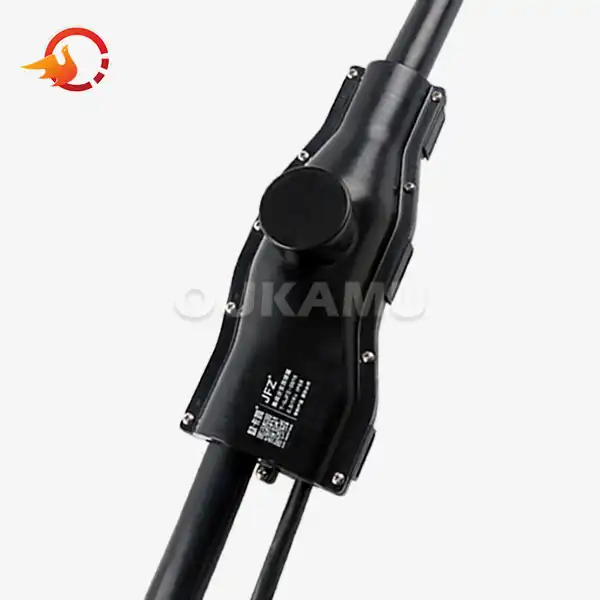
The Oukamu ZR-JFZ-150/50 branch cable joint can handle main cables that are 50mm to 150mm long and branch cables that are 6mm to 50mm long. It has a rated voltage of 0.6/1kV. This all-in-one product is flame retardant, fire-resistant, and waterproof, so it can be used safely in a wide range of settings. The small size makes it possible to install in open areas and under cable bridges, making the best use of space.
Some important technical benefits are:
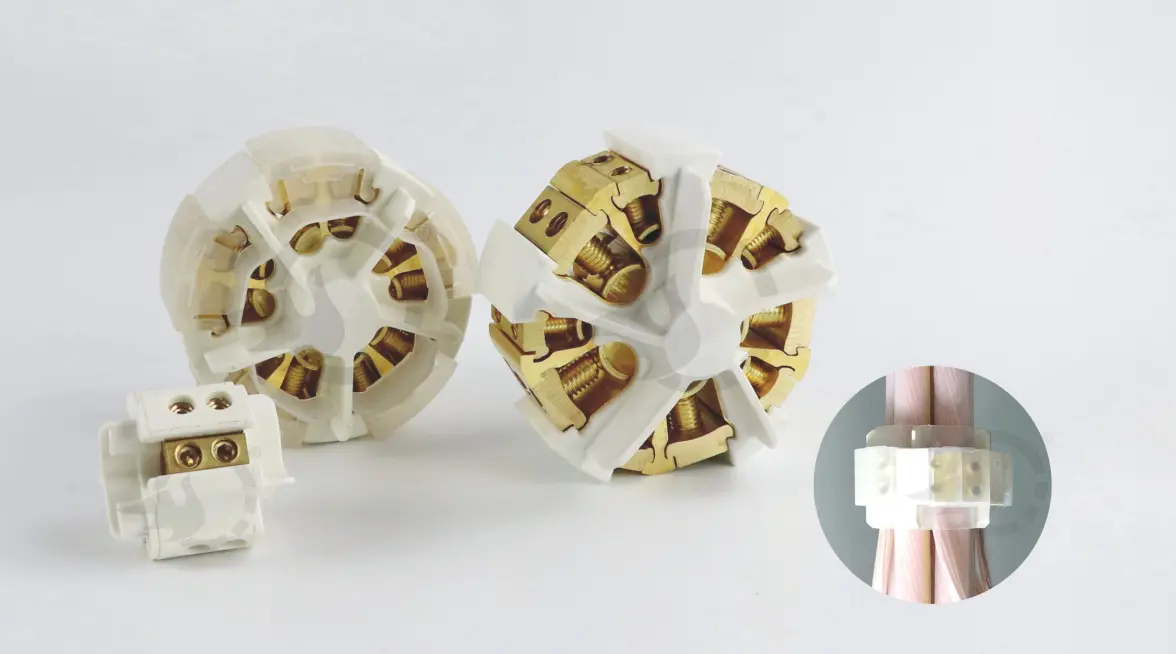
- There's no need to cut the main cable: The main conductor stays whole, which keeps the cable's integrity and gets rid of pre-cutting mistakes.
- Integrated connection design: The main and branch wires are connected thru a single flame-resistant, insulated body, which makes placement easier.
- Sealed insulation: Full insulation and closing of branch links stop water and other pollutants from getting in.
- Structure that can be used again: The connection allows for dismantling and repositioning, so it can adapt to changes in design and future growth.
For your reference, the following table lists the technical specs for the Oukamu ZR-JFZ-150/50:
| Parameter | Details |
|---|---|
| Model | ZR-JFZ-150/50 |
| Main Line of Cables | 50mm - 150mm |
| Range of Branch Cables | 6mm - 50mm |
| Level of Voltage | 0.6/1kV |
| Insulation Properties | Flame-resistant, fire-resistant, and waterproof |
| Method of Installation | At the spot without cutting the main line |
| Cable Savings | 2 to 3 meters for each connection |
| Standards for Compliance | GB/T 14048.7-2016, international safety codes |
| Reusability | Yes |
Cost Savings and Operational Benefits
By saving two to three meters of main cable per link, branch cable joint technology cuts down on material loss. When it comes to big projects with dozens or hundreds of branch points, this means big cost savings. Labor costs go down because installation steps are made easier, which means that exact length calculations aren't needed and conduit systems don't have as many complicated threading steps.
Flexible branch positioning adapts to conditions on-site without needing cables that are already made in the factory with fixed branch locations. This feature is very useful when project plans change during installation or when working in complicated places with limited room. The combined design cuts down on building time while improving the look and organization of the system.
Real-World Application: Municipal Street Lighting Project
A project to improve street lights in a medium-sized American city ran into problems with standard prefabricated branch lines. The original plans called for branch points every 50 meters, but the site showed that the poles were not spaced evenly because of other infrastructure that was already there. Using the old ways would have meant buying custom-made wires ahead of time, which would have taken a long time and cost a lot of money.
The project team used Oukamu ZR-JFZ-150/50 branch cable joints to connect standard main wires and make branch connections at real pole locations. This method cut down on waste by 18 meters of cable per city block, lowered the cost of materials by 23%, and sped up the installation process by 35%. The reusable connections let changes be made during the final review without throwing away materials, showing how useful flexible jointing solutions can be in real-life purchasing situations.
Step-by-Step Cable Jointing Process and Testing for Quality Assurance
Preparation and Planning
Successful Cable Jointing begins with thorough preparation. Check the cable's specs, the type of joint it works with, and the surroundings. Get the tools you'll need, like cable cutters, stripping tools, cleaning supplies, and testers for the insulation. Review safety rules and make sure that lockout/tagout processes are followed when working on systems that are already live.
Installation Procedures for Heat Shrink Joints
According to the maker, strip the insulation off of the cable 50 to 80 mm from the ends of the wire. Use the right solvents to clean uncovered wires and get rid of oxidation and other contaminants. To connect conductors, use mechanical or compression connectors and make sure the crimp depth and contact pressure are right. Place heat shrink tubing over the joint and use a propane torch or heat gun to apply even heat, making sure to keep moving the torch or gun around to avoid overheating any one spot. Make sure there has been complete shrinkage and seal formation before you test.
Installation Procedures for Resin Joints
Follow the manufacturer's instructions to prepare the cable ends and put in the joint molds. Mix the resin's parts in a certain way, usually 2:1 or 3:1 by volume. Slowly pour the plastic into the mold, letting any air bubbles escape. During curing, keep the temperature above 15°C. Before putting force on the joint, let it cure for the full amount of time. Usually, this is 24 hours for handling and 72 hours for full mechanical strength.
Quality Assurance and Testing Methods
Use a megohmmeter to test the insulation resistance at voltages that are right for the wire grade, which are usually 500V to 2500V DC. Resistance levels greater than 100 megohms are acceptable for low-voltage joints and more than 1000 megohms are acceptable for medium-voltage uses. Check visually for holes, gaps, or things that aren't lined up right. For high-voltage installations, partial discharge testing may be needed to find problems inside.
Troubleshooting Common Faults
Poor insulation resistance is often a sign of moisture getting in or the seal not being complete. Put on new covering materials or repair parts that are broken. Overheating at joints means that the links between the conductors aren't good enough; check the quality of the pinch and the cleanliness of the contact surface. If the outside of a joint gets damaged by mechanical forces, it needs to be protected or replaced to keep it from failing in the long run.
Procurement Insights: Sourcing Quality Cable Jointing Kits and Accessories
Evaluating Supplier Capabilities
Suppliers you can trust consistently provide high-quality products, clear documentation of compliance, and the ability to offer technical support. Check to see if they have ISO 9001 certification, follow IEC or IEEE standards, and are ready to give you test results from a third party. Brands with a history in the B2B manufacturing market, like 3M and HellermannTyton, and niche makers, like Oukamu, have a lot of success.
Bulk Buying Advantages and Customization
Buying in bulk lowers the cost per unit and makes sure that there is enough inventory for ongoing projects. Set different price levels based on how much you think you will use each year. A lot of suppliers offer customization options, such as private labeling, custom Cable Jointing size ranges, and technical training for installation teams that is made just for them. These services that add value make distributors and contractors more competitive.
Technical Training and After-Sales Support
Supplier-provided training programs make installations better and cut down on problems in the field. Full training includes choosing the right product, how to install it, how to test it, and how to fix problems. Support after the sale, like warranties, new parts, and expert hotlines, keeps projects on track and builds strong relationships with suppliers over time.
Balancing Cost and Quality for E-commerce Managers
Online markets make prices clear, but you have to be very careful when judging quality. Before placing a large order, make sure the seller is legitimate, read what other customers have said, and ask for samples of the product. Think about the total landed cost, which includes shipping, customs taxes, and the cost of keeping the goods. Make deals with several suppliers to make sure the supply chain can handle shortages of materials or sudden rises in demand.
Conclusion
To choose the right Cable Jointing methods, you have to find a balance between professional performance, cost-effectiveness, and practical needs. In industrial electrical infrastructure, heat shrink, cold shrink, pre-molded, resin-based, and mechanical parts are all used for different things.
Oukamu's new branch cable joint technology gets rid of the need to cut main cables, cuts down on material waste, and gives installers more options than standard methods can offer. Procurement teams can find safe, legal solutions that improve project results and long-term system reliability by learning about the basics of Cable Jointing, comparing method features, and working with dependable providers.
FAQ
How Often Should Cable Joints Be Inspected for Safety?
How often an inspection is done depends on how important the application is and the conditions of the environment. Underground and outdoor joints in harsh environments should be inspected once a year, using both visual inspection and thermographic scanning. Joints inside of controlled settings may need to be inspected every three years instead of every two years. In high-vibration industrial settings, mechanical connections need to be checked every six months to find loosening before they break.
Can Different Jointing Methods Be Used on the Same Cable Run?
It is fine to use more than one Cable Jointing method as long as each one meets the needs of the purpose. For underground sections that need to be as environmentally friendly as possible, a cable run might use resin joints. At accessible terminal points, mechanical joints would be used for ease of maintenance. Make sure that all of the joints meet the voltage rating and environmental requirements of the cable.
What Makes Branch Cable Joints More Cost-Effective Than Prefabricated Cables?
Branch cable joints get rid of the waste that comes from premade cables that are a set length and rarely fit the exact conditions of the site. On-site flexibility lets installers put branch points where the equipment is, not where they think it will be. This cuts down on extra wire coiling and the room it takes up. Material savings of two to three meters per branch point add up to a lot when you have a lot of connections in a big project.
Partner with Oukamu for Premium Cable Jointing Solutions
Because they have spent 20 years researching and developing branch cable joint technology, Xi'an Oukamu Electric Co., Ltd. is an expert in this field. For electricity wholesalers, contractors, and industrial repair teams, our ZR-JFZ-150/50 integrated T-connectors offer the most freedom, cost savings, and safety compliance on-site. As a reliable Cable Jointing maker, we offer full OEM services, discounts for buying in bulk, and professional training programs that are made to fit the needs of your team.
Visit okmbranchcable.com or email our procurement specialists at info@okmbranchcable.com to learn more about how our cutting-edge solutions can help your electrical infrastructure projects save money on installation costs, reduce material waste, and run more smoothly.
References
1. Smith, J.R. (2021). Electrical Cable Joint Design and Installation Standards. Technical Press International.
2. Anderson, M.K. & Chen, L. (2020). "Comparative Analysis of Heat Shrink and Cold Shrink Joint Performance in Outdoor Environments." Journal of Electrical Engineering Practice, 45(3), 112-128.
3. Williams, P.T. (2022). Modern Cable Management Systems for Industrial Applications. Industrial Publishing Group.
4. International Electrotechnical Commission (2019). IEC 60502-4: Power Cables with Extruded Insulation and Their Accessories for Rated Voltages from 6 kV to 30 kV - Part 4: Test Requirements on Accessories. IEC Publications.
5. Thompson, R.D. (2020). "Cost-Benefit Analysis of Branch Cable Joint Technology in Municipal Infrastructure." Procurement Management Quarterly, 18(2), 67-82.
6. National Electrical Manufacturers Association (2021). NEMA Standards Publication: Underground Power Cable Joints and Terminations. NEMA Technical Documentation Series.