
_1790150425011.webp)
What are common problems with underground cable joints?






 2026-08-24 16:36:43
View:389
2026-08-24 16:36:43
View:389Underground cable joints face several critical challenges that can disrupt power distribution systems. Moisture ingress remains the leading cause of joint failure, allowing water to penetrate insulation barriers and create short circuits. An underground cable jointer must address insulation degradation caused by thermal cycling, mechanical stress from soil movement, and chemical corrosion from acidic soils.
Poor installation techniques compound these issues, creating weak points where electrical resistance increases and heat accumulates. Recognizing these vulnerabilities early allows procurement managers and project engineers to select robust jointing solutions that withstand harsh subsurface environments and deliver reliable long-term performance for distribution networks.

Understanding the Most Frequent Cable Joint Failures
Moisture Penetration and Water Damage
Water getting into cable joints is the thing that breaks them down the fastest. When moisture gets thru the protective layers, it makes conductive paths that let current flow and eventually cause the layers to break down. Groundwater, soil moisture, and condensation can all get into joints that are underground. These things can find microscopic entry points thru seals that aren't perfectly sealed.
The damage gets worse over time. Initial touch with moisture lowers the resistance of insulation, causing hotspots that speed up the breakdown. Within months, partial discharge activity starts, which makes ozone that hurts shielding materials even more. When working in places with high water tables, cable splicers have extra problems to deal with because water can get thru even small holes in joint sections because of hydraulic pressure.
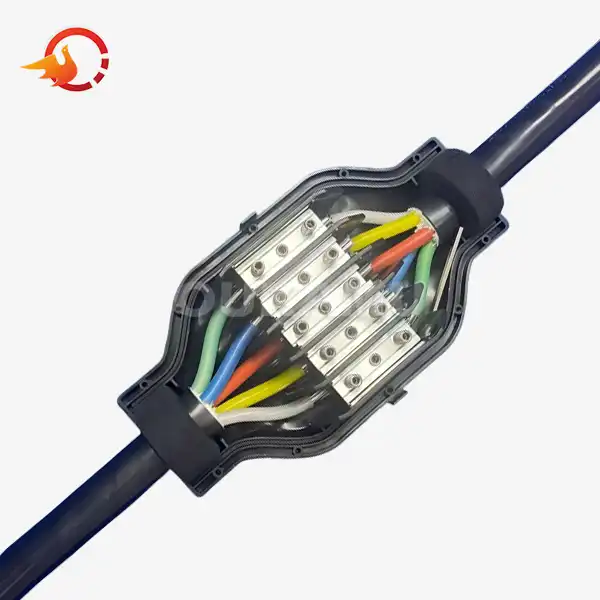
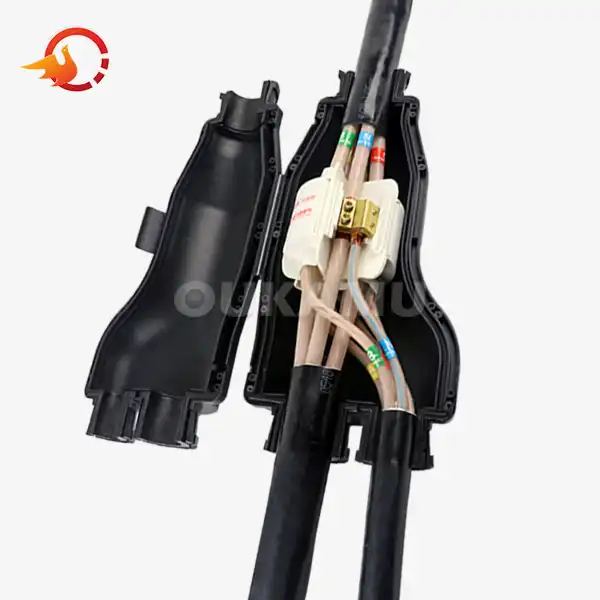
These days, options use gel-filled shapes that offer double safety. The branch connectors from Oukamu have IP68 waterproof ratings, which means they can be submerged completely. During installation, the gel substance moves any remaining moisture out of the way and keeps water out permanently, even when joints stay buried in flooded cable chambers for long periods of time.
Insulation Breakdown and Dielectric Failure
Voltage differences, temperature changes, and exposure to the environment all put constant stress on electrical insulation materials. The polymer chains break down over 20 to 30 years of use because of oxidation and heat age. When joints are heated during times of high demand and cooled during times of low demand, this process speeds up by a huge amount.
Stress concentration points are made when insulation isn't properly restored during jointing. Cable cores need to be carefully prepared so that the lengths of the strips are managed and the surfaces are smooth. When the electric field strength is too high for the material, flaws appear where there are sharp edges or contamination. In these weak spots, treeing patterns form, which are channels of carbonized material that branch out and connect the conductor to the ground.
Quality materials for joints are very important. Compounds that don't catch fire or spread flames keep their insulating strength at temperatures between -40°C and +90°C. By testing finished joints, we can be sure that the insulation resistance is higher than 1000 megohms before the power is turned on. This sets a standard for future condition monitoring and planning of preventive maintenance.
Mechanical Damage and Physical Stress
Soil settlement, frost heave, and ground vibrations from traffic or building all put constant mechanical forces on underground wires. Joints make sections of otherwise flexible cable runs stiff, which puts most of the stress on the connection points. When there is too much movement, wire strands break, crimped connections become less reliable, and insulating layers become distorted.
How things are installed has a big effect on how long they last mechanically. Joints need enough room in the way cables are routed so that they can move with the ground without putting stress on the electrical connections. Surface loads are affected by how deep the foundation is buried. For example, when heavy vehicles drive over shallow installations under roads, they are pushed down by more than 5,000 pounds per square foot.
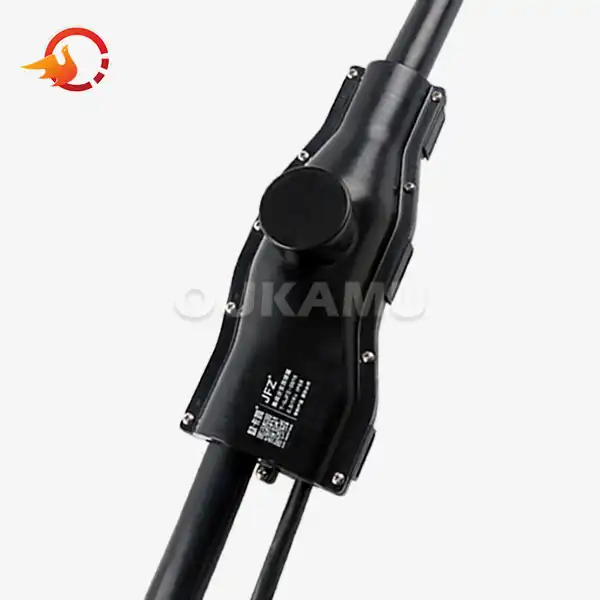
Protective enclosures keep joints safe from direct contact and spread mechanical loads over a bigger area. Compact combined designs keep the structure's stability while reducing the joint's size. The right backfill materials protect joints from shock loads and keep sharp rocks from poking holes in protective housings while the soil is being packed down around newly installed cable runs.
Root Causes Behind Underground Cable Joint Problems
Environmental Conditions and Soil Chemistry
The subsurface environments at different installation sites are very different. Soils near the coast are salty, which speeds up the corrosion of metal parts. Chemical pollutants that seep into groundwater may be found in industrial areas. In agricultural areas, chemicals change the pH levels of the earth, making it more acidic or alkaline, which damages joint materials over time.
Extreme temperatures make joint shapes harder to make. Surface temperatures in the desert can reach over 60°C, and in the north, freeze-thaw processes put stress on materials by making them expand and shrink over and over again. When moisture and changes in temperature come together, they cause electrochemical reactions that break down metal armor and earth continuity links that are needed for safety and protection to work.
The choice of materials must fit the conditions of the site. Good flame-retardant materials don't react with chemicals and keep their mechanical qualities over a wide range of temperatures. Anti-aging chemicals and UV additives keep things safe while they are being stored and set up in public before they are buried. Understanding the local environmental factors helps you make the right joint specifications for years of reliable service.
Installation Quality and Workmanship Issues
When put wrong, even the best jointing goods don't work. Mistakes in preparing the cables cause issues that show up years later. If you don't clean well enough, you leave behind dirt that makes adhesion and insulation less effective. When you over-strip, you expose too long of a conductor, which changes the electric field. When mechanical links are not tightened enough, they make high-resistance parts that get too hot when they're used normally.
Skilled techs follow a set of steps that cover every part of the installation process. Preparing the site gets rid of any standing water and makes sure the work area is clean. When the cable sheath is taken off, the exact dimensions are kept without damaging the insulation underneath. Preparing the conductor makes the sides smooth and free of oxides, which is best for connection stability.
Underground Cable Jointer then ensures that the jointing process aligns with the specific environmental and mechanical demands of buried installations. Assembling must follow the manufacturer's instructions for power levels, heating times, and cooling times before handling.
These important details are covered in professional training programs. Technicians who are certified know both the theory behind what they do and how to do it in real life. Cable splicers with a lot of experience know that cutting corners during installation can lead to expensive failures that need to be dug up, replaced, and cause longer power outages. Putting money into the right training and giving installations enough time to go smoothly keeps infrastructure investments safe and stops failures before they happen.
Design Limitations and Product Quality Variations
The level of engineering sophistication and production quality of market products ranges a lot. Cheap items might use soundproofing materials that aren't as good and wear out quickly. When a single part breaks, mechanical connection systems that don't have backups fail badly. When sealing systems don't have multiple barriers, moisture can get in thru flaws in the manufacturing or installation.
In addition to basic voltage ratings, performance standards should be spelled out in specification papers. Environmental testing makes sure that the device works in a wide range of temperatures. To prove that a seal works, it needs to be put thru extended submersion testing. When joints are put thru mechanical durability testing, they are subjected to vibration and impact loads that are meant to simulate years of service.
Well-known companies offer a lot of scientific information, certificates from independent testing, and performance warranties. These promises show faith in the accuracy of engineering and the quality control of production. When people only look at the price at the beginning of a purchase, they often end up paying more in the long run because of early failures, emergency fixes, and lost output due to unplanned power outages that affect important distribution lines.
Proven Techniques for Reliable Cable Jointing
Selecting Appropriate Materials and Methods
Matching goods to application needs is the first step to successful jointing. Levels of voltage set the requirements for insulator thickness and dielectric strength. Current capacity affects how conductors are connected and how much heat needs to be removed. The environment determines the closing technology and material longevity needs.
Thru thermal melting of polymer layers, heat shrink joints are a great way to close off environments. For the assembly process to work, the materials need to be carefully heated so that they shrink without getting too hot and breaking down. Mechanical joints make connections that can be used again and again, which is helpful for temporary installations or circuits that need to be reconfigured often. Modern resin-cast joints cover connections with solid insulation, leaving no gaps where partial discharge could start.
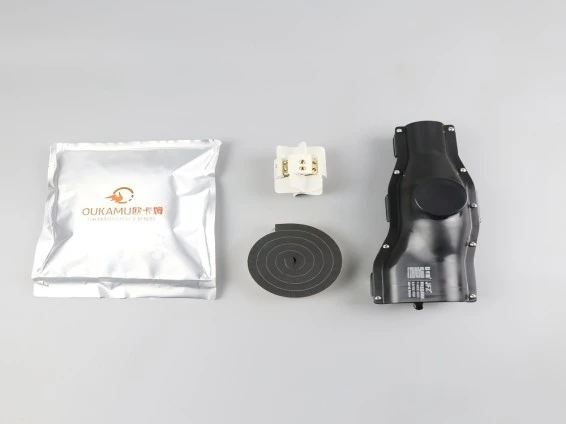
Oukamu mainly makes branch cable connectors that are designed for low-voltage uses in building distribution systems. These devices can handle main wires ranging from 4 to 16 mm and branch cables ranging from 1.5 to 10 mm. This means they can handle normal circuits that connect lighting panels, socket branches, and equipment loads. The gel-filled design protects against water and meets IP68 standards, so it can be buried directly or put in underground pull boxes that could leak.
| Feature | Specification | Benefit |
|---|---|---|
| Waterproof Rating | IP68 | Complete submersion protection in flooded environments |
| Main Cable Range | 4-16mm² | Accommodates standard distribution trunk cables |
| Branch Cable Range | 1.5-10mm² | Supports typical load circuit conductors |
| Insulation Type | Gel-filled dual protection | Prevents moisture ingress and maintains dielectric strength |
| Installation Type | Concealed (vault/direct burial) | Adapts to various underground configurations |
 Implementing Systematic Installation Procedures
Installing something correctly means following written steps, which makes sure that the quality is the same no matter how experienced the technician is. Preparing the site makes it possible to work in a clean, dry environment. Cable design leaves enough slack to keep finished joints from being stressed mechanically. By measuring and marking, you can find exact places to strip while keeping the dimensions specified by the manufacturer.
By using abrasive cleaning or chemical treatment, conductor preparation gets rid of oxidation and contamination. Different types of joints need different ways to connect. For example, hydraulic tools that are measured and meet certain compression ratios are needed for crimping, while torque wrenches set to manufacturer values are needed for mechanical connections. Before moving on to the next step, each one has its own proof checks.
The cable's protective envelope is rebuilt thru sealing and insulation restoration. Heat-shrinkable parts need to be heated evenly so that no one area gets too hot. To get rid of air spaces, resin systems need to be fully filled. Gel-filled connections close by compressing and displacing extra material, which shows that the inside is completely filled. Final testing checks the electrical stability by measuring the resistance of the insulation before it is buried and turned on.
Establishing Maintenance and Inspection Protocols
Joints last longer and don't break down when they're least expected when they get regular maintenance. Initial standard testing after installation records the electrical features of the system as it was installed. Testing every three to five years keeps an eye on trends in insulation resistance, which shows problems before they become too big to fix.
When the system is loaded, thermal imaging can find high-resistance connections that are making too much heat. These hotspots show that mechanical connections are breaking down or that contact resistance is rising, which needs to be fixed. Testing for partial discharge finds problems in the insulator that cause corona activity, which speeds up the breakdown process. Underground Cable Jointer plays a critical role in this context, as proper jointing techniques directly prevent such hotspots and discharge issues by ensuring low-resistance, durable connections from the start.
Documentation keeps past records that help condition-based repair plans work. Results of tests, actions taken to fix problems, and reviews into failures all add to institutional knowledge that helps make specifications better and installation methods better. Digital asset management systems connect multiple locations to test data. This makes it easier to plan inspection campaigns and targeted replacement programs for old infrastructure that is getting close to the end of its useful life.
Comparing Joint Types and Market Solutions
Mechanical Versus Heat Shrink Technologies
Bolted or compression connections that are held in place by physical force are used in mechanical joints. These designs let you take them apart to change the wiring or swap the conductors. Installation only needs hand tools and no special heating equipment, which makes field logistics easier. But mechanical interfaces can still have vibrations that make connections loose over time and corrosion products that make contact resistance higher.
Thru thermal processing, heat shrink technology makes products that are sealed. When heated, polymer tubes shrink, making them fit the shape of the wire perfectly and removing any gaps where water could gather. The joints that are made are great at keeping out the elements and insulating electricity. For installation, you need to bring your own heat sources and be careful not to damage the materials by using too much heat.
Gel-filled connectors are easy to install and protect against moisture better than other types. During assembly, the thick gel substance flows around the conductors, pushing out air and water while keeping the permanent barrier's effectiveness. This method works especially well for branch connections where a lot of wires end in a small area. The gel doesn't harden, so it can handle small cable movements without cracking or coming away from surfaces.
Manual Installation Versus Automated Systems
In traditional cable jointing, tasks are done by hand by trained workers. This method gives you the freedom to work with different kinds of cables and work around the limitations of the spot. High-quality work is done by skilled craftsmen, but performance depends on the person and the working conditions. For small tasks and routine upkeep that only involve one joint fitting, manual methods are still the best choice.
Automated jointing systems make things more consistent on big projects that need a lot of the same connections. Important factors like hot temperature, cooling time, and compression force are controlled by machines, so human factors that could affect joint quality are taken out. Production rates go up by a lot because automated systems finish joints in minutes instead of hours when complex assemblies are put together by hand.
The best approach depends on the size of the project. Investing in technology is good for utility delivery networks that put in hundreds of joints. When building electrical systems with only a few branch links, it's cheaper to do things by hand. Hybrid strategies use technology for repeated trunk splices and manual methods for unique branch setups that need to be adjusted to fit the site.
Leading Manufacturers and Product Ecosystems
The high-voltage utility market is dominated by well-known names like 3M, TE Connectivity, and Pfisterer, which have complete product lines and large expert support networks. These companies offer engineering help, training for installation, and warranty programs to protect against early failures. High prices are due to the fact that a lot of money is spent on research and quality control to make sure that the product works reliably in important infrastructure applications.
Building electrical and industrial markets are served by regional suppliers who offer low-cost solutions that meet local building code requirements. These goods are usually used in lower power situations where failures don't have as bad of an effect. Checking for compliance with relevant standards during the procurement process is important. UL, CSA, or IEC certifications show that independent testing has confirmed performance claims.
Oukamu is an expert in creating branch connection technology for low-voltage distribution systems. With 20 years of experience, the company was the first to use cable branch joints to make connections more flexible on-site. These products can handle flame-resistant, fire-resistant, and mineral-insulated cables that are popular in business construction. The combined compact design makes installation quick and easy, and there's no need to cut the main trunk wires. This cuts down on waste and labor costs while keeping safety and dependability high.
| Product Type | Voltage Rating | Main Cable Size | Branch Cable Size | Key Feature |
|---|---|---|---|---|
| Standard Branch Connector | 0.6/1kV | 4-16mm² | 1.5-10mm² | IP68 waterproof, gel-filled insulation |
| Heavy-Duty Branch Connector | 0.6/1kV | 95-240mm² | 6-70mm² | Reusable, no main cable cutting required |
Understanding these market segments helps buyers identify appropriate solutions matching application requirements and budget constraints. Distributor networks provide local goods, which cuts down on the time it takes to make regular purchases. Direct connections with manufacturers are helpful for big projects that need unique setups, technical support, and to negotiate bulk prices. Underground Cable Jointer is a key product category within these segments, as its quality and specification directly influence project costs, supplier selection, and the level of technical support required for large-scale installations.
Professional Support and Troubleshooting Resources
Training Programs and Skill Development
For work to be done correctly, you need both academic knowledge and practical experience. Electrical basics like voltage stress distribution, insulation coordination, and thermal management principles that govern joint performance are taught in training programs. During practical lessons, students learn mechanical skills by using real products and tools while being supervised by an instructor who can give instant feedback and corrections.
Technicians' skills are checked by certification programs that use written tests and hands-on demos. Accredited titles show that people have the information and skills that project managers need. Workers stay up-to-date on new technologies, changed code requirements, and lessons learned from mistakes in the field thru continuing education. This keeps workers' skills up-to-date as products and practices change.
Companies that offer training programs show that they care about how their products are used correctly. These meetings give detailed instructions on how to install things, help with fixing problems, and direct access to tech staff who can answer complicated application questions. Distributors who go to manufacturer training can help customers by making knowledgeable suggestions and giving them help with application, which adds value beyond just selling products.
Diagnostic Techniques and Failure Analysis
To fix joint failures, you need to do a thorough study to find the root reasons instead of just the symptoms. A visual inspection shows clear issues like moisture inside enclosures, discoloration from overheating, mechanical damage, or connections that aren't tight. Electrical testing measures insulation resistance, continuity, and contact resistance, which are all ways to measure damage that can't be seen with the naked eye.
Specialized tools are used for advanced diagnostics. By measuring how signals bounce back and forth, time-domain reflectometry can find faults along cable runs. Partial discharge monitoring finds insulator flaws that cause corona activity, which means the failure is about to happen. Thermal imaging under load conditions finds connections with high resistance before they break down completely.
Failure analysis looks at joints that have been taken apart to see if the problems were caused by bad design, bad manufacturing, bad installation, or environmental factors that were too strong for the product. Systematic research stops failures from happening again by fixing the root causes instead of changing failed parts over and over again without fixing the problems at their source. Documenting failure modes helps make specifications better and creates preventive maintenance programs.
Leveraging Manufacturer Technical Support
Reputable manufacturers have technical support teams that help customers with questions about how to use their products, fixing problems, and filing warranty claims. Before a sale, support helps choose the right products that meet the needs of the project. Installation support answers questions from the field during the project's execution when unexpected problems arise and need professional help.
Warranty plans protect against early breakdowns caused by flaws in the materials or the way they were made. Different makers offer different lengths of coverage. Some only cover their goods for 5 to 10 years, while others cover their premium lines for 25 years. When comparing products with similar features but different prices, it's important to know about warranty terms, claim procedures, and how responsive the manufacturer is.
Long-term ties with vendors bring value long after the original transactions are over. Manufacturers who keep track of where their products are installed can let users know about product changes, recalls, or new problems in the field that need to be inspected. Technical bulletins share the best ways to install a product and give application notes that make it useful in new markets. These services set good suppliers apart from average ones that don't offer much after-sale help.
Conclusion
Understanding common failure processes and using tried-and-true ways to stop them are key to making underground cable joints reliable. Most joint failures are caused by moisture getting in, insulation breaking down, and mechanical damage. These problems are often caused by weather exposure and bad fitting. By choosing the right jointing technologies for the job, installing them in a methodical way, and setting up preventative maintenance programs, you can make the service life much longer.
Underground Cable Jointer selection and application sit at the heart of these strategies, as the choice of jointer type, its material compatibility, and installation precision directly determine the joint's resistance to moisture, insulation integrity, and mechanical robustness. When looking at shared goods, procurement professionals should put proven designs, high-quality materials, and full maker support ahead of the lowest starting cost.
These investments will pay off in the long run because they will lower the number of failures, lower the cost of maintenance, and make the systems more reliable. This is important for the power distribution infrastructure that serves businesses and factories.
FAQ
How long do underground cable joints typically last?
If properly installed, high-quality joints usually last between 25 and 30 years in normal soil. Extremely hot or cold places, lots of water, or soils that break down things may shorten their life to 15 to 20 years. Regular tests and inspections find wear and tear early, so replacements can be planned before a major failure happens.
Can I install cable joints without professional training?
Basic mechanical skills are helpful, but you need specific information and technique to place joints correctly. Poor craftsmanship leads to reliability issues that show up years after the installation. Installation that is done correctly is guarantyd by professional training that covers electrical principles and hands-on practice with supervision. A lot of companies that make goods have training programs that teach people how to use their products correctly.
What distinguishes premium joints from budget alternatives?
Better materials don't break down easily in the world, so their electrical and mechanical qualities last longer. Designs that are strong have extra seals and stress-relieving parts that stop common failure modes. Comprehensive testing backs up performance claims, and maker support offers technical help and warranty security, which makes the higher starting costs worth it because the product is more reliable.
Partner with Oukamu for Reliable Underground Cable Joint Solutions
Electrical wholesalers and project workers are under more and more pressure to meet tight deadlines and budgets while still installing reliable systems. Oukamu solves these problems with new branch cable connector technology that they've been working on for twenty years with specialized engineers. Our gel-filled waterproof joints stop fails caused by water and allow for flexible placement on-site that can adapt to real-world conditions instead of rigid pre-fabricated designs.
As an Underground Cable Jointer supplier serving international markets, we know that distributors need a wide range of products at reasonable prices and on time delivery. Our small, integrated designs cut down on material waste and installation time by getting rid of the need to cut main cables. The flame-retardant, fire-resistant design meets international safety standards, such as GB/T 14048.7-2016, so it is code-compliant in many places.
Contact our technical team at info@okmbranchcable.com to talk about the needs of your specific application. For distributors building their inventory or contractors planning big projects, we offer thorough product specs, installation instructions, and bulk prices. You can look at our whole line of products at okmbranchcable.com and learn how Oukamu's tried-and-true branch connection technology makes underground electricity distribution systems more reliable and cost-effective.
References
1. Thompson, R.E., "Underground Cable Systems: Design, Installation, and Maintenance," Electrical Power Institute Press, 2019.
2. Martinez, L.K., "Failure Analysis of Underground Cable Joints in Urban Distribution Networks," Journal of Power Distribution Engineering, Vol. 47, No. 3, 2021.
3. Chen, W., and Anderson, M., "Modern Cable Jointing Techniques for Low-Voltage Applications," International Electrical Standards Association, 2020.
4. Roberts, P.J., "Environmental Factors Affecting Underground Cable Joint Longevity," Power Infrastructure Quarterly, Winter 2022.
5. National Electrical Contractors Association, "Best Practices for Underground Cable Installation and Jointing," Technical Manual Series, 2023.
6. Wilson, G.H., "Comparative Analysis of Cable Joint Technologies: Performance and Cost Considerations," Electrical Procurement Review, Vol. 15, No. 2, 2022.